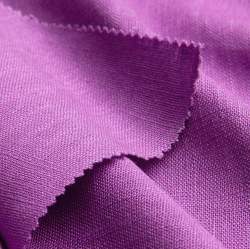
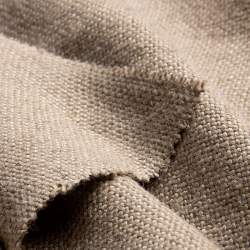
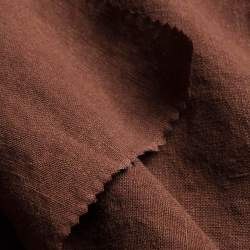
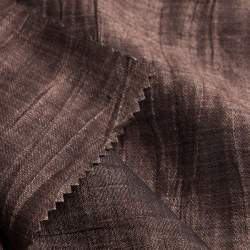
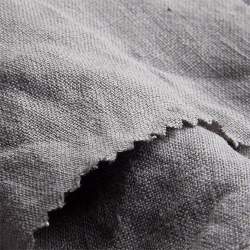
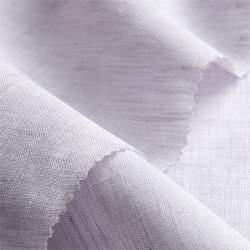
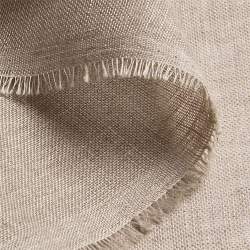
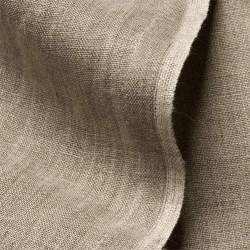
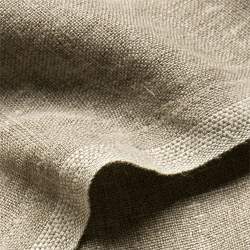
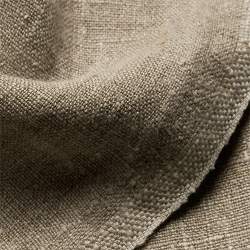
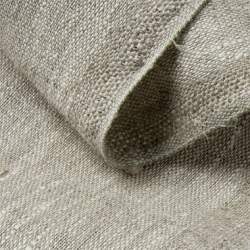
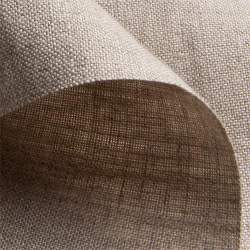
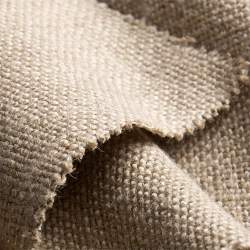
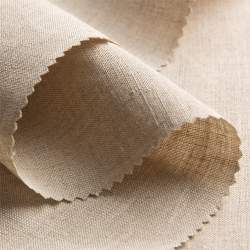
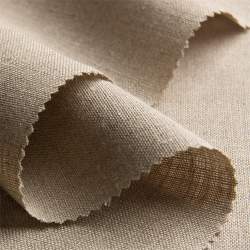
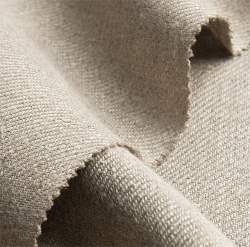
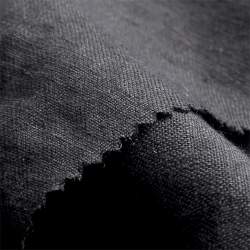
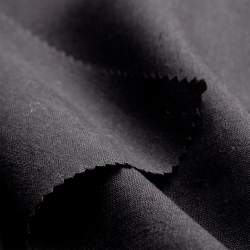
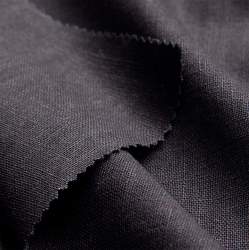
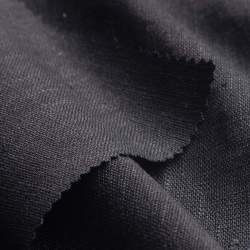
Linen fabrics - high quality and natural from Anita Pavani Fabrics
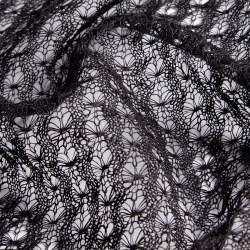
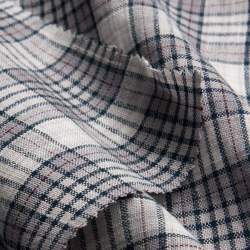
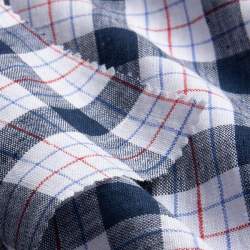
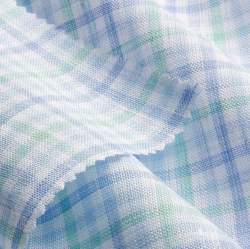
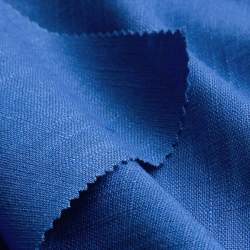
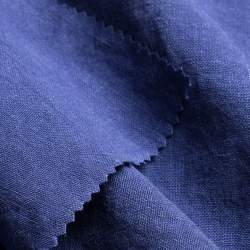
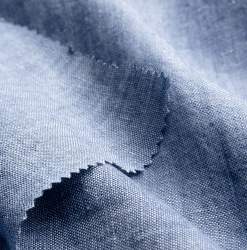
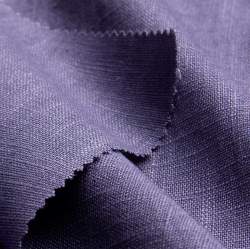
Whether you are looking for fine, coarse, thin or heavy linen fabrics, you will find a large selection of 100% pure linen or organic linen fabrics of the best quality that you can buy online by the metre. Before buying linen fabric by the metre, we recommend that you use our Sample-Service. Our linen fabrics are suitable for sewing clothing as well as for home textiles such as linen curtains or linen table linen. You can find out more about linen fabrics and their production, processing and use below.
What is linen fabric - a little material science
Linen has accompanied mankind for thousands of years and is one of the most sustainable textiles of all. The smooth and tear-resistant fibres obtained from the stalks of the flax plant give linen its typical properties. It becomes more and more beautiful with use, the tendency to crease decreases significantly over time, and the odd ‘heirloom’ testifies to the longevity of the material. Our linen is usually made from a large selection of long flax, whose fibres do not fluff and fabrics made from it have a typical elegant shimmer. Many of these high-quality linens come from Belgium or Italy.
Cultivation and origin
The growth of the flax plant and fibre development is highly dependent on weather conditions. The seed is sown very early (mid-March to mid-April) and regular rainfall is required for the fibre to grow evenly during the main growth phase in May/June.
The process of extracting fibre from the stalks of common linseed (Linum usitatissimum) is very time-consuming and machine-intensive. During harvesting, the flax plants are carefully pulled whole from the soil (roasted) so as not to damage the fibres. The seed capsules are removed and the stalks are separated from the fibres in a moist environment (so-called roasting) using microorganisms. Roasting also determines the fibre length and ideally takes place in the field in a maritime climate. It is important to stop the rotting process and start the subsequent drying process at the right time, otherwise the microbiological fibre degradation will attack the fibres, making them weaker and shorter. The material is then dried and the wood cores are broken to separate them from the outer fibres. The fibres are combed several times so that they can be spun in parallel. Short and long fibres are processed separately; the original colour of the flax fibres is grey-brown to grey-beige.
Around half of the flax currently grown worldwide comes from Western Europe (France, Belgium, the Netherlands), most of the European long fibres are exported to China, where flax is also grown, as in the former Soviet Union and Egypt.
Due to the continuing trend towards sustainable natural materials, cultivation is sometimes unable to keep up with demand, which means that prices are currently rising.
In our shop you will mainly find linen fabrics of European origin.
Use & processing of linen fabrics
Linen fabrics as clothing
Linen fabrics have been used for thousands of years as underwear, outerwear and, thanks to their lint-free nature, also in medicine as wraps or bandages. The boiling resistance of the undyed material and the durability of the fibres justify the high production costs.
Linen fabrics are also represented in fashion today in their diversity, the former resentment regarding the creasing of linen clothing has given way to a self-confident understanding as a sign of quality. The Italian way of life defines ‘linen creases nobly’ and favours high-quality linen due to its countless advantages. This also benefits the increasing use of typical Italian linen crepes, which are deliberately pleated and used as loose shirts, dresses, skirts or airy curtains with a Mediterranean flair.
Relatively new are knitted linen jerseys as loose summer shirts, dresses or skirts, e.g. in a layered look.
Compared to cotton fabrics, linen fabric feels cooler and smoother, can absorb more moisture unnoticed without feeling wet and also releases it again well, so it regulates the temperature very well in hot weather.
Linen fabrics are generally antistatic and the fibre is dirt-repellent, so they need to be washed less than, for example, cotton fabrics, and allergy sufferers appreciate the antibacterial properties of linen. Last but not least, the trend towards visible mending supports the longevity of the material, which is naturally biodegradable as a natural fibre.
Linen fabrics as home textiles
As home textiles, linen fabrics have been a part of heirlooms for generations due to the durability and boilability of the natural and bleached versions - and rightly so. From bed linen to kitchen towels, woven in sumptuous jacquard from napkins to classic linen tablecloth or linen curtains , this fabric enhances every room and elevates the table to the dining table. Even the simple peasant linen treasures kept in the chests of great-grandmothers are still beautiful today, decades or more later, and want to become part of our lives and stand the test of time for generations to come.
Processing linen fabric and linen cloth
For open weave linen fabric, it is advisable to finish the cut edges with a zigzag stitch before pre-washing to prevent fraying. A cotton sewing thread is suitable for sewing due to the similarity of the fibres. Linen fabrics are inelastic, which is why wider cuts should be favoured (see pattern), and slightly wider seam allowances should also be considered. In order to achieve a smoother drape, the linen can also be pre-washed several times before processing, please follow the instructions in the care instructions for the fabric or the instructions in the section ‘Care of linen fabrics’.
If the linen fabric is comparatively open weave, the use of a seam tape could be helpful for seams with tensile stress.
Processing linen jersey
When pre-washing linen jerseys it is advisable to finish the cut edge loosely with a zigzag stitch so that no running stitches form. As linen knits do not have the elasticity of cotton knits, it is important to choose a suitable cut. Linen jerseys are usually knitted as singles, which means that they sometimes have a bias in the rows of stitches. In this case, the pattern pieces should not be orientated along the course of the stitches but along the selvedge. This can lead to a bias on the garment, but prevents the side seams from turning in. With linen jersey, a jersey needle should be used to avoid stitch damage and thus running stitches.
Differences in linen quality
Long flax refers to fibre bundle lengths over 50 cm; normally the flax fibres consist of approx. 2/3 short flax. Depending on cultivation, weather and roasting, different ratios of short to long fibres are produced.
As with all natural fibres, the fibre length determines the yarn and therefore the fabric quality.
Wet-spun long flax produces the highest yarn qualities with a typical linen shimmer and a cool, smooth feel. Fabric made from linen is characterised by its durability and does not pill, so it does not lose its material and beauty even after years. It is therefore not surprising that linen fabrics and clothing have been passed down for centuries, sometimes through generations.
In comparison, short fibres tend to shed in the course of use and do not have the fantastic properties of a long flax.
Sustainability of linen fabrics
The extreme durability of the material makes linen fabrics one of the most sustainable natural fibres alongside hemp fabrics. Particularly high-quality linen made from long flax can be used for generations and can therefore hardly be beaten from an ecological point of view. Apart from hemp, it is the only plant fibre available from Central European cultivation, and processing often takes place on this continent, meaning that transport distances are short compared to cotton, for example - which is why we prefer European linen fabrics to others in our range.
Flax requires relatively small amounts of nutrients, artificial fertilisers are hardly necessary, it should be grown in alternating crop rotation with other plants and therefore does not leach out the soil. When the roasting process is used in the field (taurine roasting), there is no pollution of the groundwater due to decomposition processes; the decomposition products are completely absorbed by the soil and recycled. This process is common for European flax. Water roasting is significantly less favourable in terms of the ecological balance and tends to be used in hotter regions.
Linen is naturally dirt-repellent, so it does not need to be washed as often as, for example, cottons fabrics, which not only saves water and energy, but also detergent. Historically, linen clothing was always repaired and mended, if the piece was beyond repair it was plucked for the paper industry or as a dressing material (Scharpie), a linen fibre had several lives, so to speak, until it was handed over to biodegradation.
Overview of linen fabrics
Although the weight of a linen fabric alone gives an indication of its use, the density of the weave is also a criterion. A tightly woven fabric with fine yarn can be just as heavy as a loose weave with thicker yarn. In this respect, this table should only be understood as a general categorisation. It is always advisable - especially when ordering linen fabrics online - to order handle samples or sample cards in advance.
Types of fabric and their uses
|
Linen fabric name
|
Weight approx.
|
Use
|
|
Leinengaze, Käseleinen, Siebleinen
|
100 – 150 g/qm
|
Veils, airy curtains, bed canopy, for straining
|
|
Leinenbatist
|
100 – 150 g/qm
|
Blouses, shirts, fine curtains
|
|
Leinenkrepp
|
100 – 200 g/qm
|
Light outerwear, curtains
|
|
Feinleinen
|
130 – 220 g/qm
|
Light outerwear, decoration, curtains
|
|
Leinenköper
Leinentwill & Leinendrell
Leinenfischgrat
|
150 – 300 g/qm
|
Trousers, dungarees, decoration, upholstery
|
|
Leinen-Jacquard
|
160 – 280 g/qm
|
Outerwear, home textiles
|
|
Leinendamast
|
200 – 250 g/qm
|
Table linen, bed linen, decoration
|
|
Leinwandgewebe
|
variable
|
Depending on its weight, it is suitable for a wide variety of uses. From decoration to curtains and outerwear.
|
|
Leinen-Rips
|
250 – 400 g/qm
|
Decoration
|
|
Leinen-Canvas
|
400 – 600 g/qm
|
Covers, work clothing, tents, painting ground
|
|
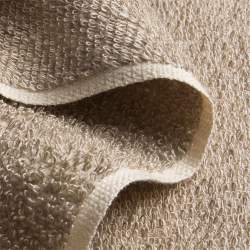
Leinen-Frottee
|
450 – 500 g/qm
|
Bath textiles, sauna
|
|
Segeltuch
|
500 – 560 g/qm
|
Coverings, awnings, covers
|
Linen fabric in blended fabrics
Half-linen is usually woven with cotton warp threads and linen weft threads, making it cheaper than pure linen and more stable than pure cotton fabric. Yarn made from shorter flax fibres is usually used. The various weaves of Half-linen jacquards half-linen jacquards are inspiring in their diversity and are the most beautiful form of these blended fabrics.
How do I care for linen fabrics?
The undyed and unbleached natural colour of linen is best preserved by using a detergent without added bleach. Creamy white and unbleached linen fabrics can be bleached by using bleaching agents or optical brighteners.
With natural fibre fabrics, the colouring usually determines the washing temperature. Natural or bleached linen can be boiled without any problems, coloured or printed linen can withstand up to 40° C with suitable detergents.
Linen absorbs a lot of water during washing, which is why the washing machine should not be packed too full and a spin cycle should definitely be avoided (gentle cycle). Pressing the fully soaked fabric against the drum wall causes permanent creases during the spin cycle. Ideally, therefore, hang the fabric up dripping wet and spin at most lightly. With every wash and also when wearing linen clothing, the linen changes slightly, the drape becomes softer and the tendency to crease decreases. Linen should be ironed or mangled while still slightly damp, it can also be steamed - preferably with a damp cotton cloth between the iron and the fabric.
What does shrinkage in linen mean?
The linen fibre is stretched during processing and contracts again both as a raw fabric and after any industrial pre-washing during the first wash, depending on the water temperature. This effect is called shrinkage, and we indicate it as a percentage value for each fabric. To compensate for this shrinkage, make sure you order enough fabric and wash it according to the specified care instructions before processing.
Dyeing linen fabrics
Natural fibre fabrics can be dyed quite easily both before processing and as a finished piece of clothing or home textile. If the desire for dyeing is already known during the production of a textile work, a sewing thread made of natural fibres (cotton sewing thread for linen) is recommended, as this takes the colour better than a polyester thread.
Click HERE for our sewing threads made from natural fibres.
Dyeing linen fabrics with synthetic dyes
The trade offers various dyes with which linen can be dyed quite easily in the washing machine or in a tub; the durability of the dye in the linen fibre is very good. Please follow the instructions on the dye packaging.
Dyeing linen fabrics with vegetable dyes
Natural dyeing substances from many (indigenous) plants can be used to dye linen. In this case, it is essential to find out in detail beforehand about the mordanting methods to be used to prepare the fibres for dye absorption and the respective dyeing process. You should be aware that dyeing with natural dyes can turn out differently. Likewise, some natural dyes are not permanent and the colour disappears, which may also be desirable.
Patterns for linen fabrics
The cooling effect of linen fabrics and the structure and look are recommended for fine blouses, more robust tunics, haute couture or sturdy workwear such as dungarees, depending on the design of the material. It is important to ensure a loose fit, as linen fabric does not give and linen jersey is not as elastic as cotton jersey.
Historical facts about linen fabrics
Flax fibres have been documented as textile fibres since the Neolithic period (Aurignacian). Between 36,000 and 31,000 years ago, partially dyed flax fibres were found in Georgia; the oldest find from Central Europe is around 28,000 years old. Since then, linen fabrics have been used as textiles both on the skin and as outerwear as the most common material made from plant fibres in many cultures. Incredibly fine linen bandages (130 warp threads to one centimetre!) are known from the tomb of the Egyptian high priest Masaharta. Despite today's processing techniques, it is not possible to achieve this pre-industrial, hand-made quality. Even the high quality of various trousseau cloths from pre-industrial times, which have been kept in one family or another for generations, far surpasses the quality of today's products.
The ancient Greeks made high-quality and stable armour from linen long before our modern composite materials, taking advantage of the robustness of flax fibres.
It was only with the mass import of cotton, which was much easier and cheaper to process, at the beginning of the 19th century that flax was displaced from first place among textile plant fibres.
During the two world wars, Germany tried to distance itself from cotton imports and the cultivation of flax and linen weaving were briefly promoted. With the beginning of the economic upswing, linen clearly fell behind in comparison to the new synthetic fibres that flooded the market. After a low point in production in the early 1980s, the appreciation of textiles made from this timeless plant fibre is on the rise again. Today's trend towards more sustainable textiles is currently causing a shortage of fibres and fabrics for linen.
 +49 641 962820
 only limited stock available !
 Available now!
 sold out